
Failure-To-Yield Accidents
Everyone on a public road has a duty of care to obey all traffic laws, including respecting the right-of-way. If a driver fails to meet this standard, severe collisions called failure-to-yield accidents can occur.
Have you sustained injuries in this type of auto accident? The team of failure-to-yield accident lawyers at Bachus & Schanker can help you fight for a settlement or award that covers your medical expenses, lost wages, property damage, and emotional suffering.
What Is a Failure-To-Yield Accident?
A failure-to-yield accident in Wyoming occurs when a driver doesn’t respect right-of-way laws. This could involve conduct like not yielding to pedestrians, cyclists, or other drivers, causing a collision.
What Does Wyoming Law Say About Yielding the Right-Of-Way?
Title 31, Chapter 5 of the Wyoming Statutes offers insight into many common scenarios that a driver may experience.
It addresses:
- Intersections: When two drivers arrive at an intersection at the same time, the car on the left must yield to the one on the right, while a vehicle that is already at the intersection has the right-of-way over those approaching.
- Left turns: Drivers turning left must yield to oncoming traffic.
- Entering roadways: Drivers entering any type of roadway must yield to all vehicles on the main road.
- Pedestrians: Drivers must yield to pedestrians crossing marked or unmarked crosswalks.
- Emergency vehicles: All traffic must yield and make room for emergency vehicles.
- Stop/yield signs: Drivers facing yield signs must yield to cross-traffic, while at stop signs, the first vehicle to stop goes first.
These laws apply to all vehicles, including motorcycles and trucks.
Who Is Typically at Fault in a Failure-To-Yield Accident?
In these types of accidents, the person at fault is usually the one who failed to yield. There could be exceptions, however. For example, if the driver was pushed into an intersection by another vehicle, fault could fall on that other driver.
Since Wyoming has modified comparative negligence laws, it’s possible to be partly responsible for the accident and still receive compensation.
Where Do Failure-To-Yield Accidents Commonly Occur?
Failure-to-yield accidents typically occur at intersections, including four-way stops, highway merge points, parking lot exits, and pedestrian crosswalks.
What Are the Most Common Causes of Failure-To-Yield Crashes?
One of the most common causes of these accidents is distracted driving. A driver who isn’t paying attention to the road might not notice changes in traffic lights or stop signs.
Reckless driving could be a cause, too. This involves any type of conduct that knowingly puts the safety of others at risk.
Speeding can also lead to these accidents. A driver may not be able to stop in time at an intersection if they are traveling at high speeds.
What Types of Injuries Can Result from Failure-To-Yield Accidents?
Failure-to-yield accidents can cause all manner of injuries because they typically result in side impact or T-bone collisions. Since the sides of vehicles don’t provide as much protection to passengers or drivers as the front or back does, the injuries can be severe.
You can experience:
- Soft tissue injuries
- Bone fractures
- Facial injuries
- Organ damage
- Internal bleeding
- Spinal cord injuries
- Traumatic brain injuries
These accidents can also be psychologically traumatic. You may start suffering from anxiety or depression and could even develop a driving phobia.
What Compensation May Be Available After a Failure-To-Yield Accident?
If you pursue a claim after a failure-to-yield accident, you may be entitled to economic and non-economic damages.
Economic damages cover your medical expenses, including your future care needs. Property damage is also addressed, along with any wages you may have lost while recovering from your injuries.
Non-economic damages cover the physical and emotional suffering you have experienced. If your injuries make it impossible to live your life as you used to, you can receive compensation for your loss of enjoyment of life.










How Is Fault Proven in a Wyoming Failure-To-Yield Accident?
To prove fault, your attorney will establish that the other party owed you a duty of care that they breached, and it resulted in your injuries. This is considered negligence. In some instances, the liable party may have been wrongful in their conduct instead of negligent, such as when dealing with a reckless driver.
What Evidence Helps Support a Failure-To-Yield Claim?
To prove a failure-to-yield claim, you can rely on numerous types of evidence, including:
- Police reports
- Traffic camera footage
- Traffic light sequencing reports
- Skid marks
- Points of impact on the vehicles
- Vehicles’ final resting positions
- Eyewitness statements
- Medical records
It can be very important to obtain statements from expert witnesses, too. These can include accident reconstructionists who can paint a clear picture of how the accident occurred.
How Long Do You Have To File a Claim Under Wyoming’s Statute of Limitations?
In Wyoming, the statute of limitations is four years from the date of the accident. It is never a good idea to wait that long to begin a claim, however, because it could mean you have less viable evidence available. Witnesses may also not remember what happened as clearly, and physical evidence may have deteriorated.
How Can a Cheyenne, Wyoming, Car Accident Lawyer Help After a Failure-To-Yield Accident?
A failure-to-yield accident can leave you battling serious injuries. The last thing you need is to also have to worry about the legal aspects of beginning a claim. An attorney can make a significant difference.
At Bachus & Schanker, our lawyers will investigate the accident and gather pertinent evidence to demonstrate what occurred. We will calculate your full losses to ensure you’re fairly compensated and will aggressively negotiate with insurance companies on your behalf.
If we can’t obtain a settlement because there are disputes over fault or other issues, we can take the case to court. You don’t have to go through this process alone.
Related Car Accident Resources




#1 Amazon Best Seller in the Legal Industry
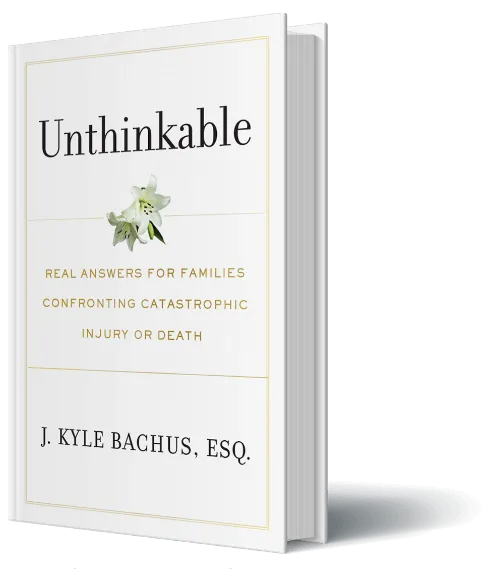
Attorney Kyle Bachus knows first-hand how difficult it can be to suddenly lose a loved one in an accident. It’s also devastating when you or a family member suffers severe injuries that forever change your lives. Kyle wrote this book as a resource from his personal experience for families who have suffered a traumatic loss.
A Spanish edition of the book is also available, offering the same support and guidance to Spanish-speaking families.
You Deserve Fair Compensation
Don’t let the insurance companies intimidate you into accepting less than you deserve. We’re ready to fight for you.